
Hot air recirculation (HAR)
Hot exhaust loops back down into the cooler's own fans. Inlet air runs warmer, and you lose capacity on the hottest days.
Reviewed by Nick Agius, Founding Partner Russell De Jesus, P.Eng., VP of Engineering
Exhaust that comes back for a second lap.
Fast inlet air pulls the exhaust back down.
Speed sets pressure
Fast inlet air means low pressure at the sides, and that drags exhaust back down.
Fans below the bundle
Forced draft exhaust drifts out slowly, so more falls back. Induced draft fires it out much faster.
Wind
A crosswind bends the plume into your cooler, or the one next door.
Four things that stack the odds.
- Forced draft fans the most exposed design
- Middle of a bank air gets in from two sides only
- Tight approach outlet within about 10°C of peak summer air
- Summer wind pushes exhaust where it shouldn't go
Common tell: one cooler in a bank runs hotter than its neighbours on hot, windy afternoons.
Fixes, from design stage to retrofit.
- Design stage
More ground clearance
More room under the cooler slows the inlet air.
- Design stage
Smarter plant layout
Line coolers up with the summer wind and keep engine exhausts away from fan inlets.
- Retrofit
Wind screens
Side mesh screens calm crosswinds at the fan.
- Retrofit
Deep inlet bells
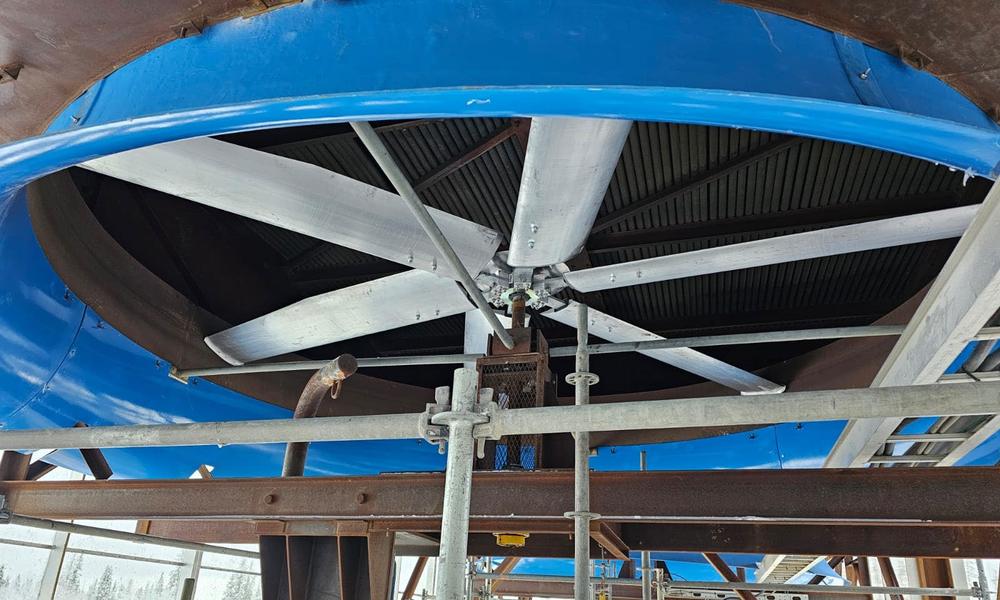
An E-Bell™ elliptical inlet bell adds depth below the fan ring, which can help steady the air in and reduce how much exhaust short cycles back.
Think HAR is costing you capacity?
Send us what you've got. We'll tell you if recirculation is part of the problem and what it takes to fix it.
- What to send
- Plot plan or cooler layout
- A few site photos, including the fan inlets
- Summer outlet temps and any trips
- Prevailing summer wind, if you know it